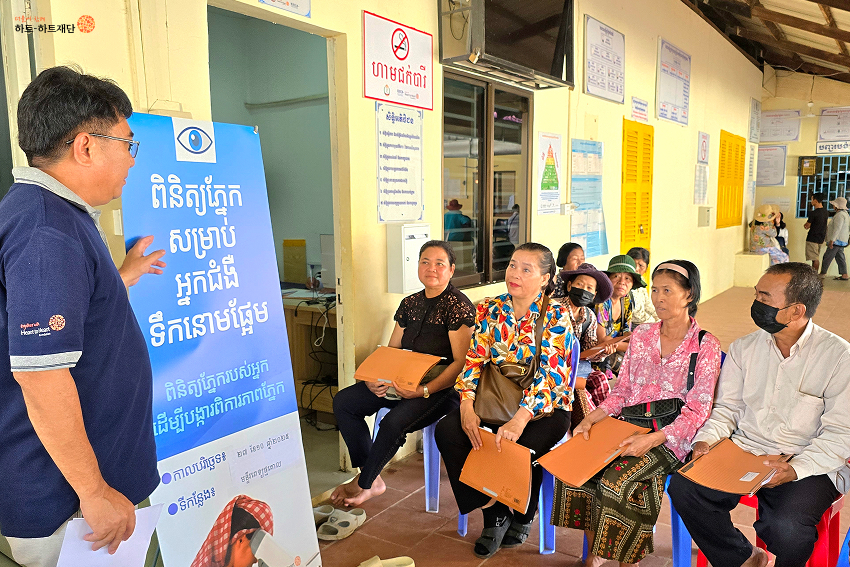
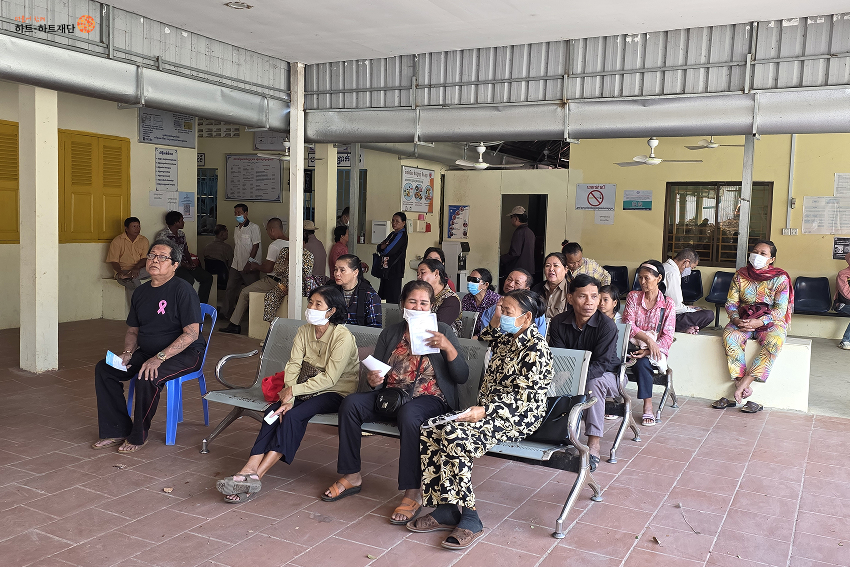
Scenes of residents receiving explanations about the integrated screening
The Heart-Heart Foundation Cambodia Branch is implementing a project to prevent
and manage Non-Communicable Diseases (NCDs) in the Battambang region of Cambodia.
During the process of conducting the existing NCD screening, we recognized that NCDs, such as diabetes,
cause critical complications to eye health.
Therefore, we sought to advance the project to the next stage by establishing a system for
the integrated management of both NCDs and eye health (EYE).
The Ophthalmologist
As part of the project‘s development, the branch actively conducted the NCD+EYE integrated screening,
targeting residents in remote areas who have difficulty accessing health facilities.
The NCD+EYE integrated screening was expanded through the NCD Screening Day and outreach screenings in the second half of the year,
with a total of 1,167 residents (815 women) participating.
In particular, 302 of the screened residents were confirmed to require a secondary, in-depth examination.
The branch is therefore collaborating with the local NGO, Seva Canada,
to connect and support these individuals so they can receive appropriate follow-up care.
This is highly significant as it moves beyond the existing NCD screening to establish a community-based integrated screening system
that manages NCDs alongside a major complication: eye diseases.
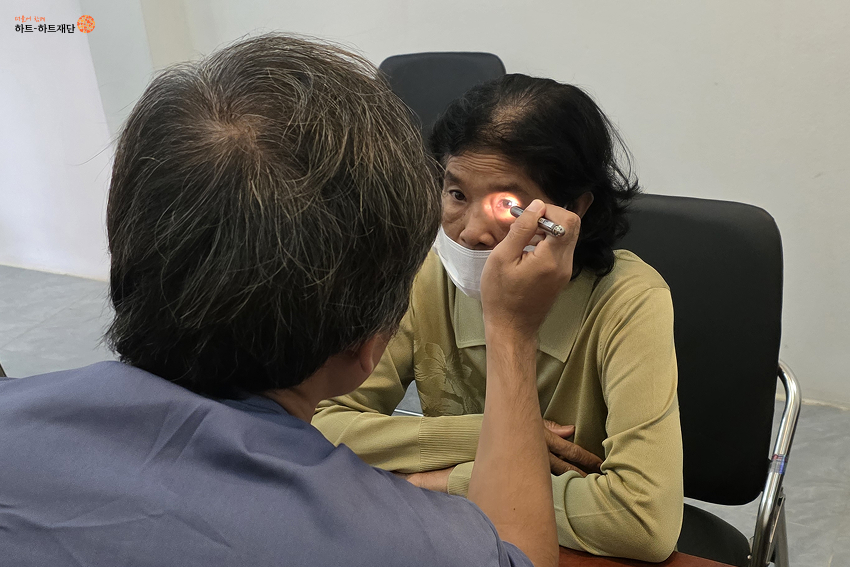
Scenes of residents receiving eye examinations from an ophthalmologist
To further strengthen the NCD-EYE integrated screening system, the ‘Diabetic Retinopathy (DR) Screening‘ for diabetic patients
was conducted at the two referral hospitals in the Thmar Koul and Bavel areas,
commemorating World Sight Day in October and World Diabetes Day in November.
Diabetes causes complications throughout the body, but it is particularly fatal to eye health,
leading to diabetic retinopathy, one of the main causes of blindness.
Diabetic retinopathy is a disease where the blood vessels in the retina inside the eye are damaged due to diabetes,
and it is crucial to receive an eye examination every year starting from the time of diabetes diagnosis.
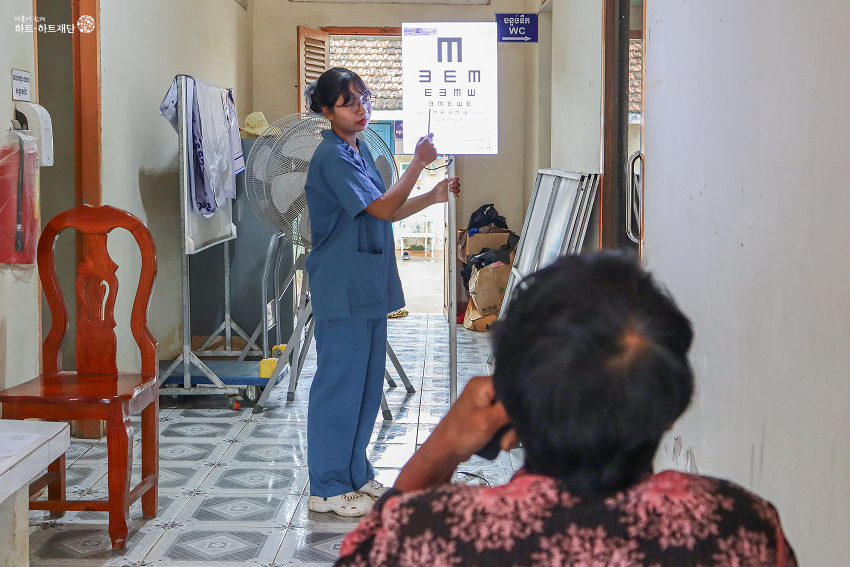
Scenes of performing vision screening
International and national health guidelines, such as the International Health Guidelines (WHO-PEN) published
by the WHO in 2020 and Cambodia‘s National Guidelines (NCD-SOP) in 2024,
essentially emphasize the early detection and regular evaluation of diabetes complications as mandatory.
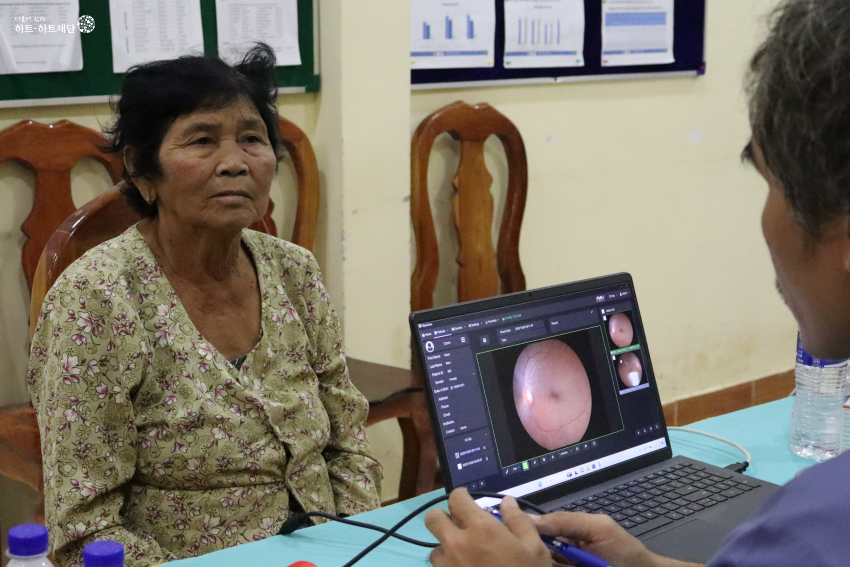
Scenes of performing the examination using a fundus camera
However, public hospitals in the Battambang region had limitations
in diabetic retinopathy screening due to the lack of specialized equipment for retinal photography
and a shortage of trained ophthalmic medical staff.
To improve this situation and strengthen capacity for managing diabetes complications,
the branch conducted screenings using the newly installed ‘Fundus Camera‘.
This equipment is effective for the early detection of vision deterioration and the risk of blindness
by easily determining the condition of the retina and optic nerve without direct contact with the eye.
Prior to the screening, the branch trained local ophthalmologists on how to use the fundus camera,
supporting them to develop the capacity to perform screenings independently.
The local doctors participated directly in this screening, gaining experience with diabetic retinopathy screening.
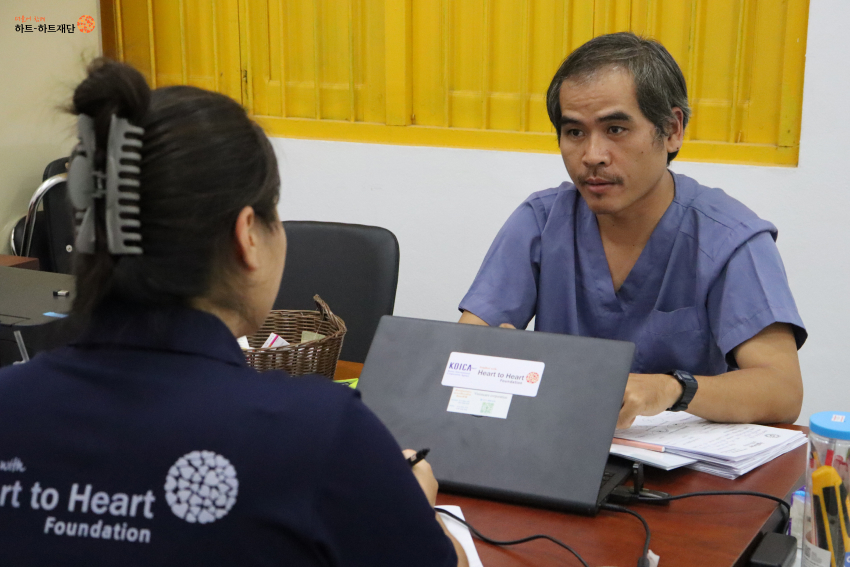
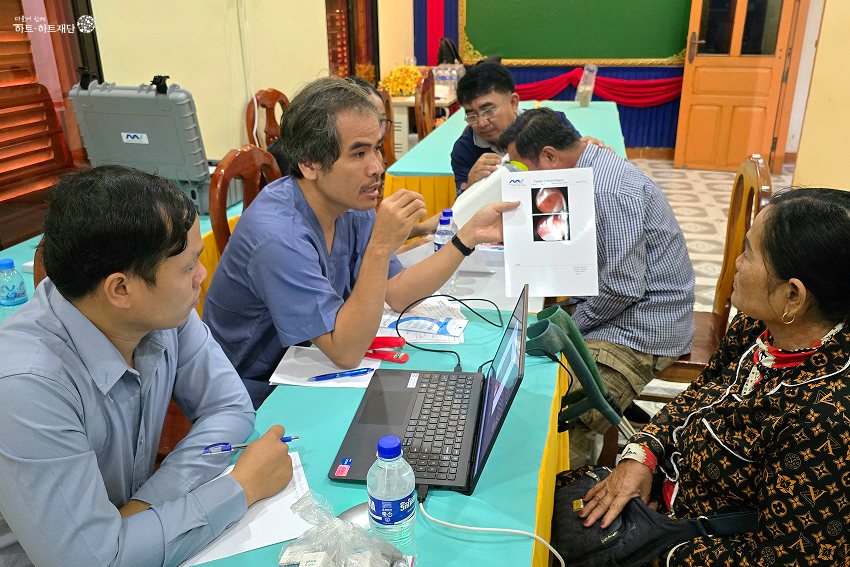
Scenes of residents consulting with an ophthalmologist after the screening
Two hundred and one diabetic patients received vision and fundus examinations during the four diabetic retinopathy screenings conducted
at the two referral hospitals, and 69 patients were found to have eye problems.
Patients who were found to have other eye diseases, such as cataracts, in addition to diabetic retinopathy,
were guided to receive further treatment at hospitals in the Battambang and Siem Reap areas.
This screening program is highly significant because it established a community-based integrated screening system
where local diabetic patients can receive essential eye examinations without traveling far,
and are connected to appropriate treatment if problems are found.
Scenes of residents who came to receive the screening
The Heart-Heart Foundation Cambodia Branch plans to continuously expand education
and NCD-EYE screening for the prevention of NCD complications in the future.