Refresher training for HC health workers
The Cambodia office of Heart-Heart Foundation is currently implementing Phase 2 of a community-based
Non-Communicable Disease (NCD) prevention and management project in Battambang, Cambodia.
Last April, refresher training sessions on NCDs were conducted for healthcare workers in the Thma Koul Operational District (Thma Koul OD)
and laboratory staff from the Provincial Referral Hospital.
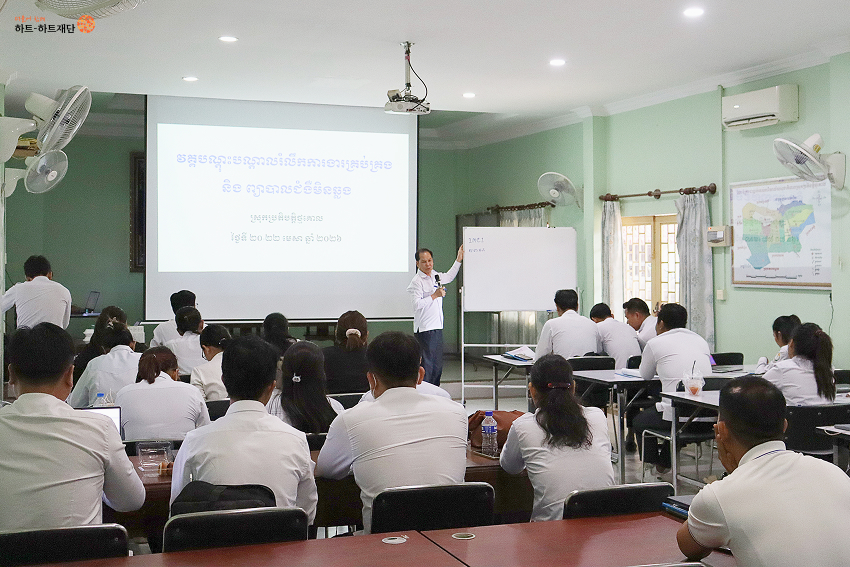
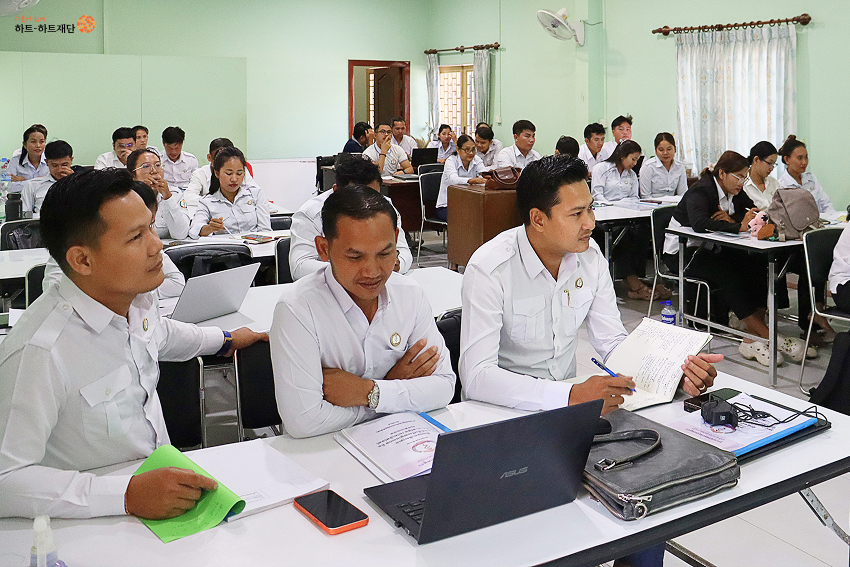
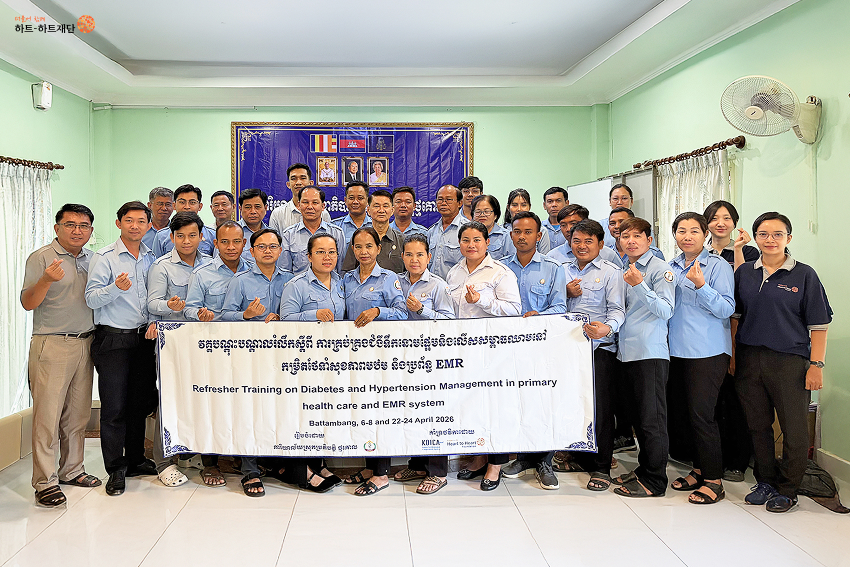
HC health workers participating in the training
The refresher training for healthcare workers conducted in the Thma Koul Operational District was attended by 64 NCD focal nurses
and medical staff from 17 health centers and was carried out over six days.
The training focused on strengthening the capacity of local health centers to more actively diagnose
and manage non-communicable diseases (NCDs), including diabetes.
The training was conducted in an interactive format based on the national Standard Operating Procedures (SOPs), covering the following topics:
- Guidelines for the diagnosis and treatment of diabetes and hypertension
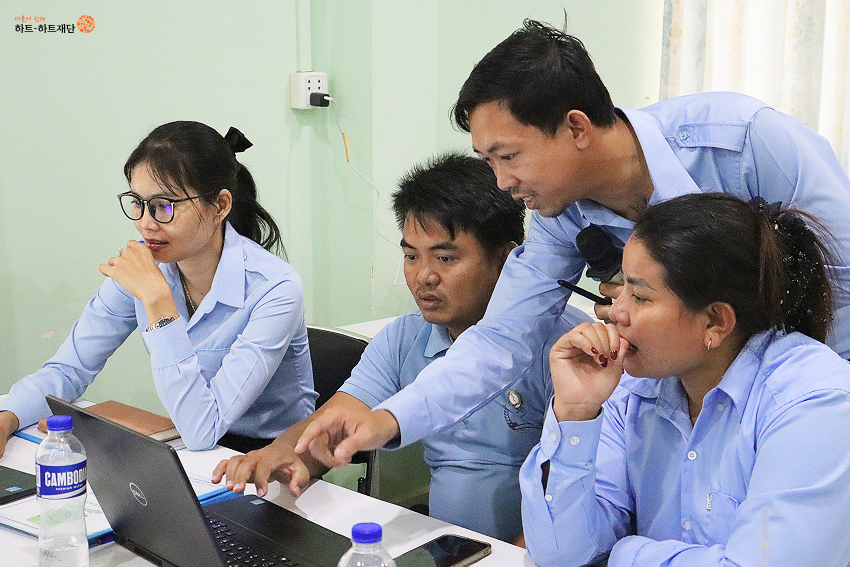
- Cardiovascular disease (CVD) risk assessment and counseling
- Follow-up management and referral systems for diabetes patients
- Use of Electronic Medical Records (EMR) and data management
- Data analysis and reporting using Excel
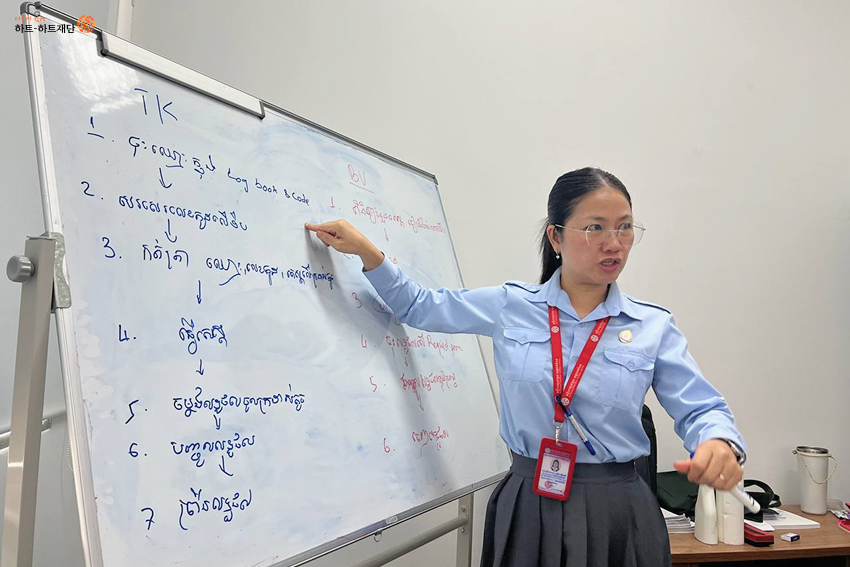
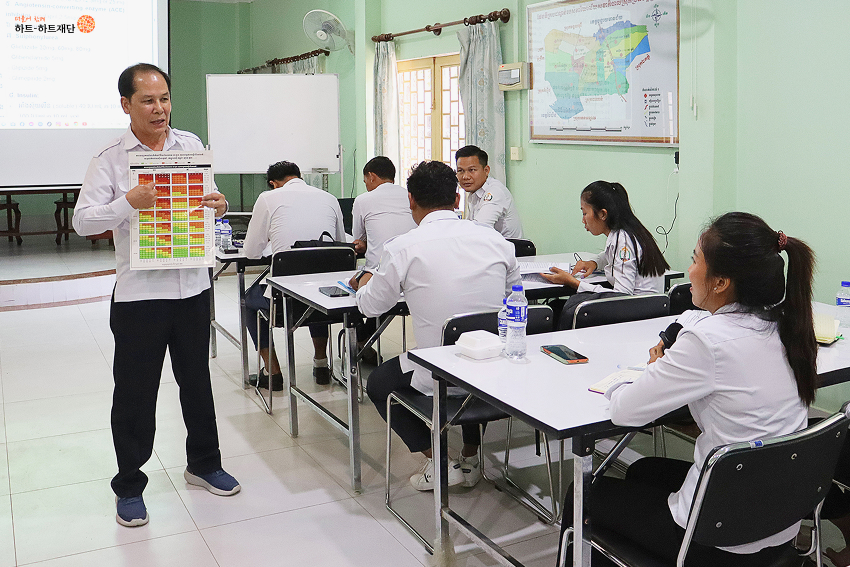
Hands-on EMR Data Analysis Session
The training also placed strong emphasis on how EMR data can be effectively utilized for patient management and decision-making.
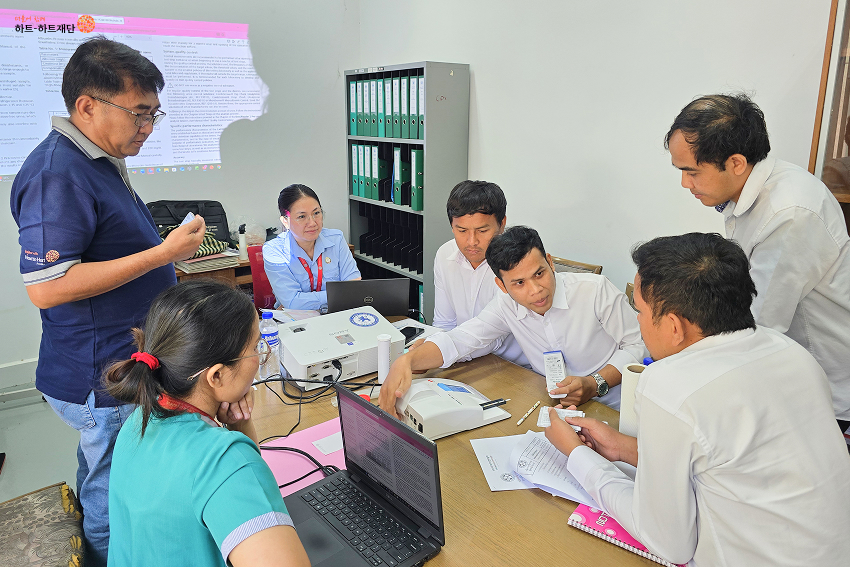
Using real patient data, healthcare workers conducted practical exercises on identifying duplicate patients,
analyzing loss-to-follow-up cases, tracking patient management, and preparing reports.
Through these activities, participants gained a deeper understanding of the importance of data-driven healthcare services.
Training Session Led by Dr. Chiek Sivhour
In addition, refresher training was provided for four laboratory staff members from Babel Referral Hospital
and Thma Koul Referral Hospital under the Battambang Provincial Referral Hospital system.
As accurate test results and laboratory quality management are essential to NCD management and clinical decision-making,
strengthening the capacity of frontline laboratory personnel helps enable earlier detection
and management of complications in patients with diabetes and hypertension.
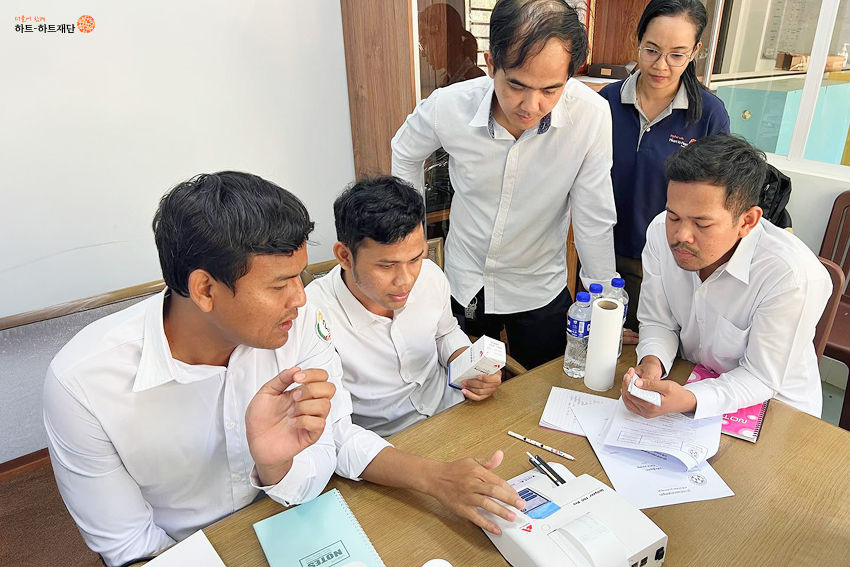
Laboratory Staff Conducting Practical Training Sessions
The laboratory staff training focused on Urine Analysis and Albumin-to-Creatinine Ratio (ACR) testing,
covering topics such as internal quality control, biosafety and infection prevention and control to improve testing accuracy.
Led directly by medical personnel from the Provincial Referral Hospital laboratory,
the training provided participants with hands-on practice in operating urine analyzers, conducting ACR tests,
and interpreting test results, helping to strengthen their technical competency in laboratory equipment use.
NCD Clinic Laboratory Staff Refresher Training
In addition, discussions were held on establishing standard operating procedures necessary for laboratory management,
as well as improving systems for recording and reporting test results.
Through these efforts, each hospital was able to strengthen more consistent and systematic standards for laboratory operations.
Both training programs emphasized interactive and participatory learning rather than lecture-based instruction,
enabling participants to engage more effectively with the training content.
Feedback Session on EMR Data Analysis Practice
The pre- and post-training evaluation results were highly positive.
Participants’ average scores improved significantly from 14.7 to 19.3 out of 20, and 98% of participants responded
in the survey that they would be able to immediately apply what they learned to their daily work.
These results demonstrate that the training went beyond simply delivering knowledge
and led to meaningful improvements in practical capacity for diabetes diagnosis and treatment, as well as the use of EMR systems.
CVD Risk Assessment Training Session
Through this training, health centers in Battambang have taken another step toward strengthening their role
as primary healthcare providers capable of continuously managing chronic diseases within their communities.
Laboratory staff at the referral hospitals are also expected to play a more proactive role
in the early identification of high-risk patients through Urine Analysis and ACR testing,
as well as in the prevention and management of kidney-related complications.
Group Photo of HC Refresher Training Participants
Heart-Heart Foundation will continue working to strengthen healthcare systems so that communities in areas
with limited access to medical services can receive safer and higher-quality healthcare.
We sincerely appreciate your continued interest and support !
The Community-Based Non-Communicable Disease (NCD) Prevention and Management Project in Battambang,
Cambodia is a public-private partnership project supported by KOICA.