Last December, the Savar Community Eye Center (CEC) in Bangladesh reopened in a newly expanded and renovated facility.
The upgrade represents more than a physical improvement—it marks a major step forward in strengthening community-based eye care services.
Here are 3 key changes transforming eye care access for local residents.
* What is a Community Eye Center (CEC)? A Community Eye Center (CEC) is a primary eye care unit located within an Upazila Health Complex (UHC), a public health facility at the sub-district level in Bangladesh. CEC provides essential services such as vision testing, retinal examinations, eyeglass prescriptions, basic medications, and referrals to tertiary eye hospitals. |

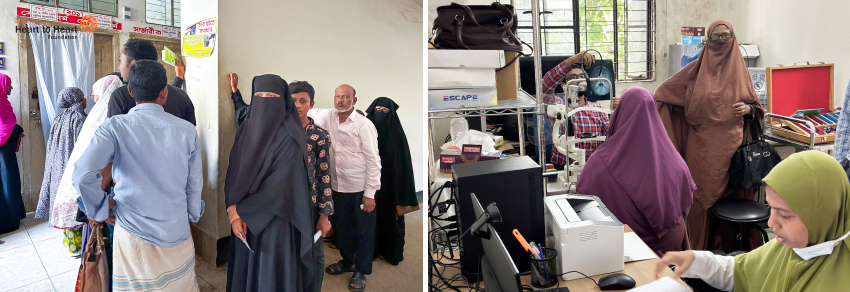
The original, limited clinical space before the expansion
Previously, the Savar Eye Center was located on the second floor of an annex building,
which made it difficult for elderly patients or those with mobility issues to access.
Services were provided in a cramped space where consultation and examination rooms were not separated.
With up to 100 patients visiting each day, many had to wait in narrow and crowded hallways without a proper waiting area.
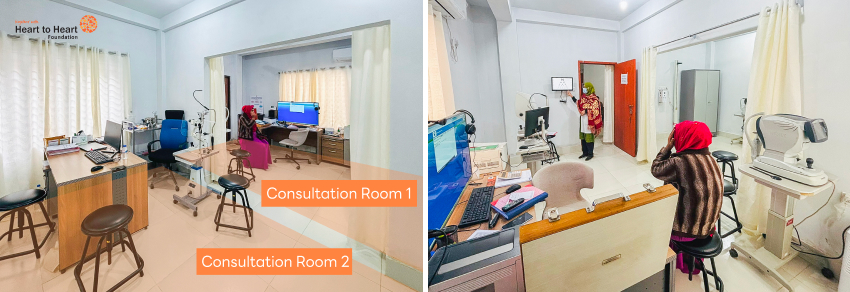
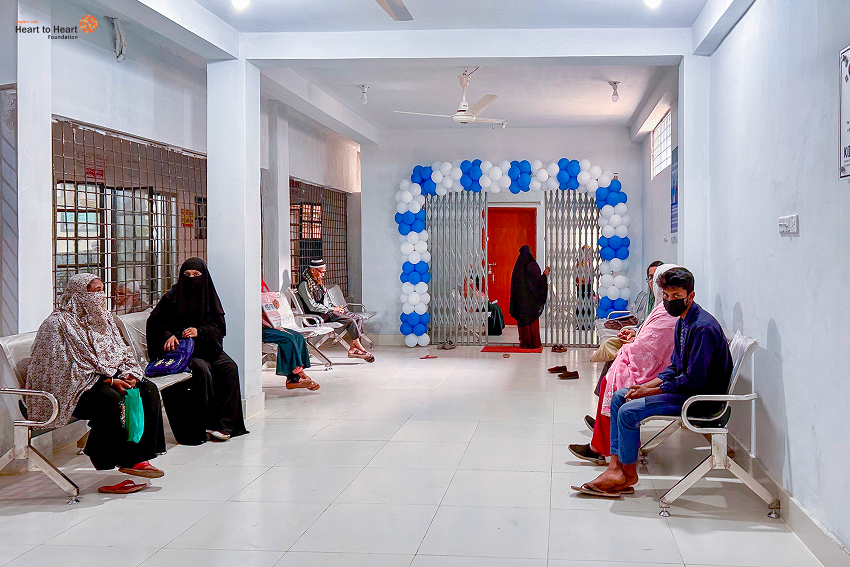
Enhanced patient environment at the newly expanded Savar CEC
To address these challenges, the center was relocated to a standalone facility
on the ground floor last December.
[The newly renovated center features...]
● Ground-floor access for improved accessibility
● Two fully equipped consultation rooms
● Dedicated ophthalmic nurses supporting patient care
● A spacious waiting area for patients
We ensure that everyone can receive quality eye care in a safe and comfortable environment and "Leave No One Behind".

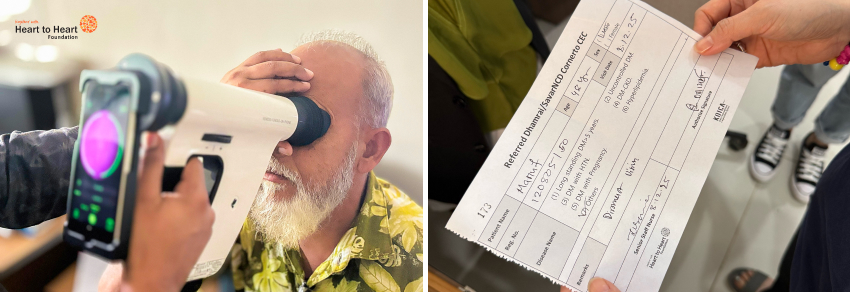
(Left) Fundus examination for diabetic retinopathy screening / (Right) Referral card for patient transfers between NCD Corner and Eye Center.
Bangladesh faces a growing burden of non-communicable diseases (NCDs), particularly diabetes,
ranking among the top ten countries globally in the number of people living with diabetes.
Diabetes carries a high risk of systemic complications and is closely linked to eye diseases.
1 in 3 diabetic patients is at risk of developing diabetic retinopathy, a leading cause of blindness.
Early detection through regular eye examinations is therefore essential.
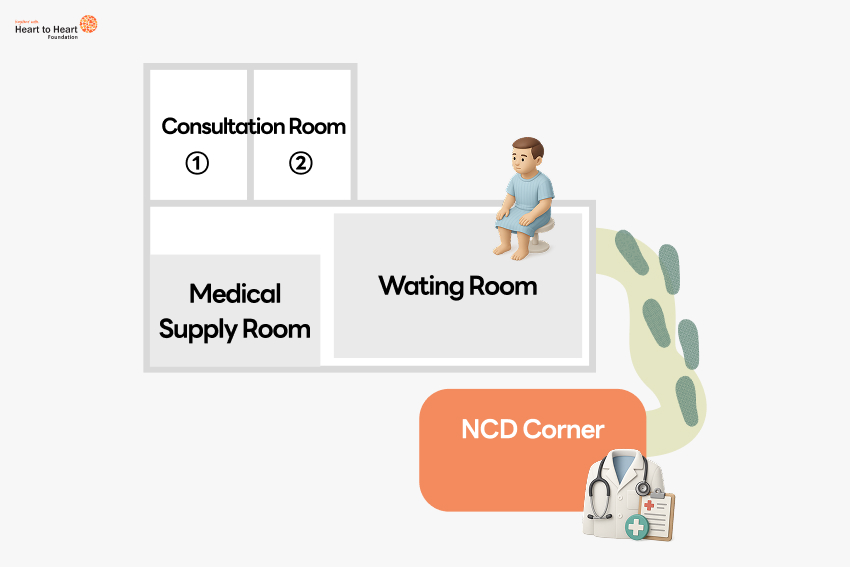
Savar CEC Floor Plan
To address this challenge, Heart to Heart Foundation established a direct referral system between the Community Eye Center (CEC)
and the NCD Corner within the government health facility.
The two service units are located just 5 steps apart, allowing patients to move easily between diabetes management and eye care services.
[Integrated Eye-NCD Linkage Services]
● Streamlined Referrals: Standardized referral protocols and referral cards allow patients to receive services without administrative delays.
● NCD Corner → Eye Center: Patients with a history of diabetes exceeding five years or those identified as high-risk are referred for eye examinations.
● Eye Center → NCD Corner: Patients diagnosed with retinal diseases or suspected hypertension/diabetes are referred to the NCD Corner.
This linkage system strengthens early detection and helps prevent complications that may lead to irreversible vision loss.
* What are Non-Communicable Diseases (NCDs)? NCDs are chronic, non-infectious diseases that develop over time, including diabetes, hypertension, heart disease, and cancer.
* What is an NCD Corner? An NCD Corner is a designated unit within primary health facilities(Upazila Health Complexes) in Bangladesh. It provides basic screening, management, and referrals for non-communicable diseases, helping reduce complications and premature deaths through continuous community-based care. |

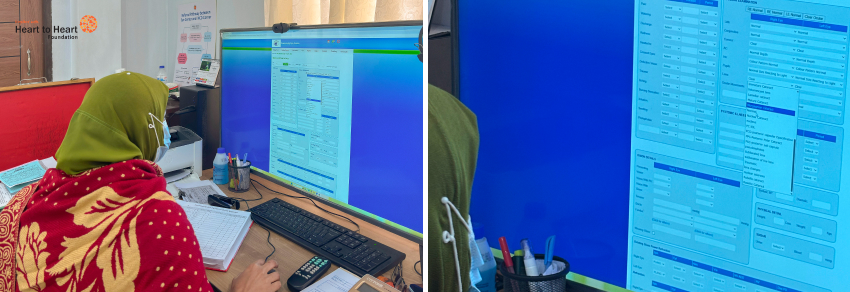
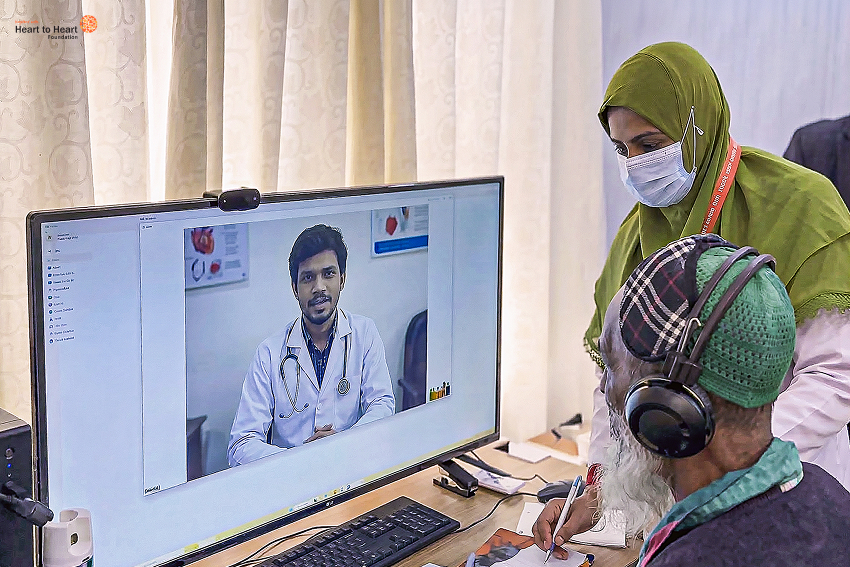
A nurse inputting patient examination data
To mitigate the shortage of ophthalmologists, the Bangladesh government introduced a Telemedicine System,
which connects primary centers to tertiary hospitals, in approximately 200 government eye centers.
Since last December, the Savar Eye Center has been operating telemedicine services in collaboration
with the National Institute of Ophthalmology & Hospital (NIO&H).
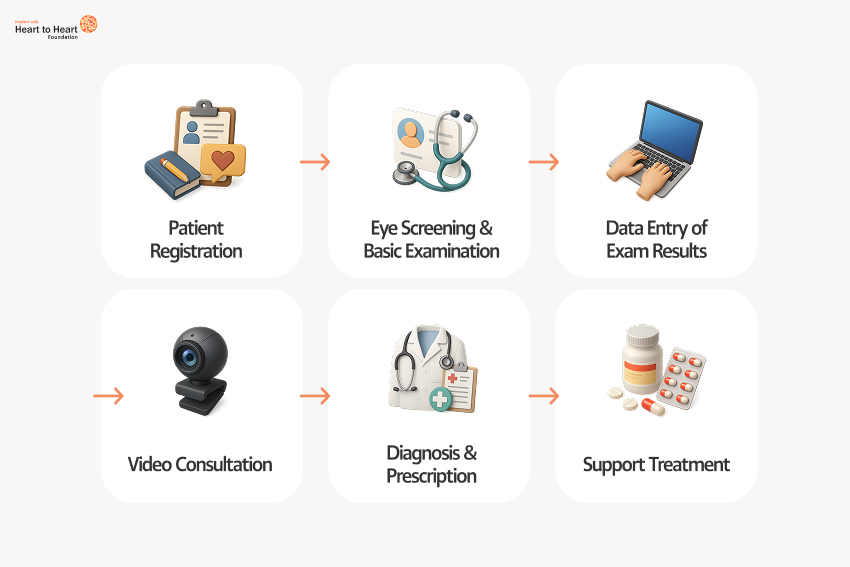
Once the on-site nurse inputs the screening results into the system,
specialists at the National Institute of Ophthalmology & Hospital (NIO&H) review the data in real-time to provide diagnoses
and prescriptions via video consultations.
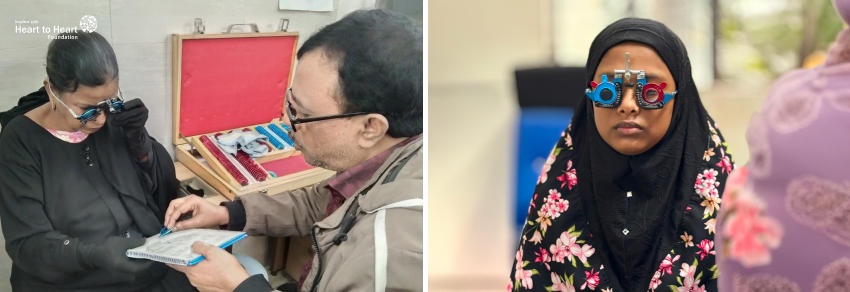
High-quality prescription eyeglasses provided to patients
[Through Telemedicine System]
● Expert Care at the Local Level: Residents can receive real-time diagnoses and prescriptions from top-tier specialists at NIO&H without traveling to the capital.
● Efficient Task-Sharing Between Nurses and Ophthalmologists
● Quality Eye Care through Efficient Task-Sharing : Local nurses conduct examinations and upload patient data to the system,
allowing ophthalmologists at the National Institute of Ophthalmology & Hospital (NIO&H) to review the results and provide diagnoses and treatment prescriptions.
This allows patients to access expert care without traveling long distances to the capital city.

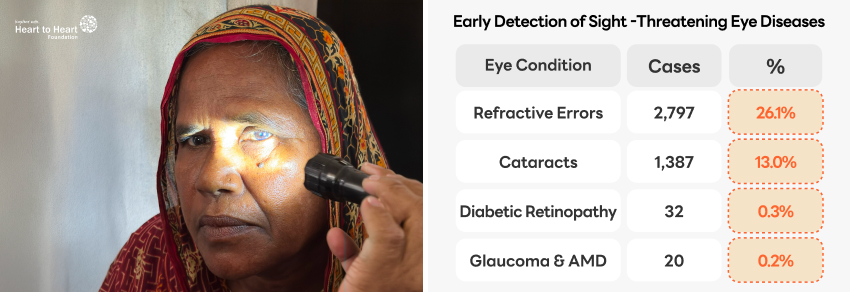
In 2025, the Savar and Dhamrai Eye Centers served a total of 10,705 patients, averaging 75 consultations per day.
For patients diagnosed with vision-threatening conditions, we provided the following tailored interventions to ensure timely and effective care
[Summary of Early Detection of Sight-Threatening Eye Diseases]
● Refractive Errors (2,797 cases) → More than 1,200 patients received eyeglasses
● Cataracts(1,387 cases) → 25 surgeries supported for underprivileged patients
● Diabetic Retinopathy(32 cases) → Referred for specialized treatment and intensive care
● Glaucoma & AMD(20 cases) → Referred for advanced care

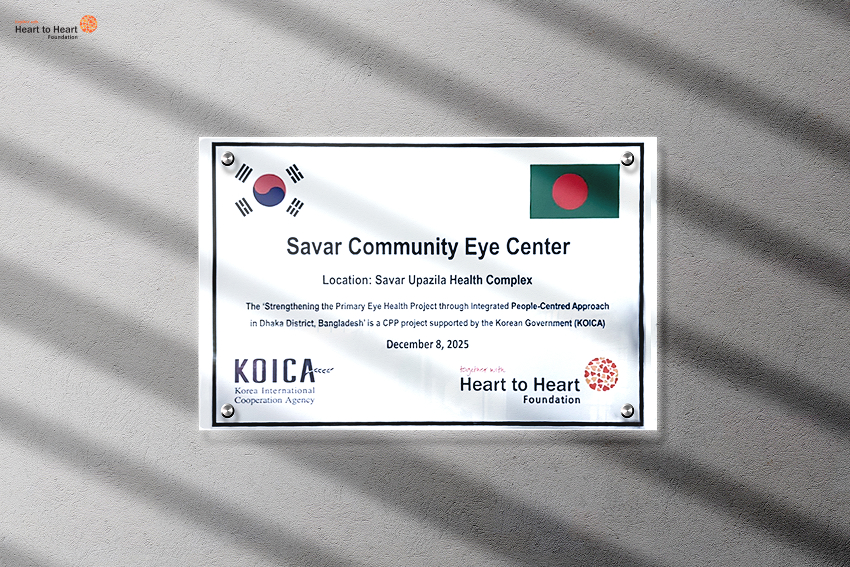
Heart to Heart Foundation remains committed to strengthening early detection and treatment of eye diseases through the Savar and Dhamrai Community Eye Centers.
Moving forward, we will continue to strengthen our eye health care services to ensure that community members
in underserved areas of Bangladesh have access to the right treatment at the right time.
We invite you to stay engaged and support our efforts to bring sustainable eye care services to medically underserved communities.
Together for Better Vision!
“Strengthening the Primary Eye Health Project through Integrated People-Centered Approach in Dhaka District, Bangladesh(2025-2027)”>