Training Session for Capacity Building of Water Point Committees(WPC)
Heart to Heart Foundation is implementing the "Community Participatory Integrated WASH Improvement Project (2025-2027)"
in Zomba District, Malawi, funded by Korea International Cooperation Agency (KOICA).
From April 13th to the 29th, a Capacity Building Training program for 40 Water Point Committees (WPC)*
is being conducted to ensure a stable supply of clean and safe water for the residents of Zomba.
*What is WPC(Water Point Committee)?
WPC is a community-based group responsible for the day-to-day operation and maintenance of local water facilities.
Training Session for Capacity Building of Water Point Committees(WPC)
In M’biza region (Zomba District), where the project is implementing,
the access rate to water facilities is approximately 95%, which is remarkably high.
However, if a committee lacks the necessary management capacity,
even minor technical issues can lead to facilities being abandoned or water sources becoming contaminated,
making it difficult to secure a sustainable supply of safe water.
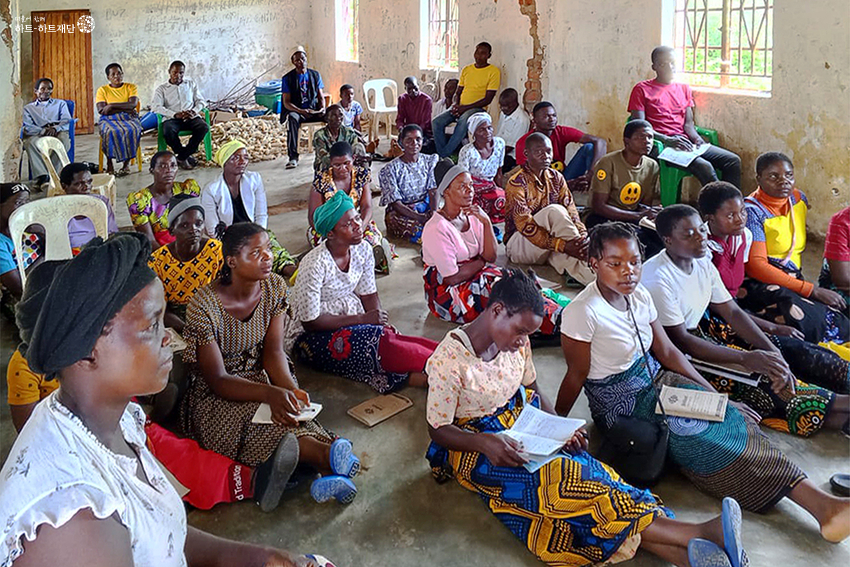
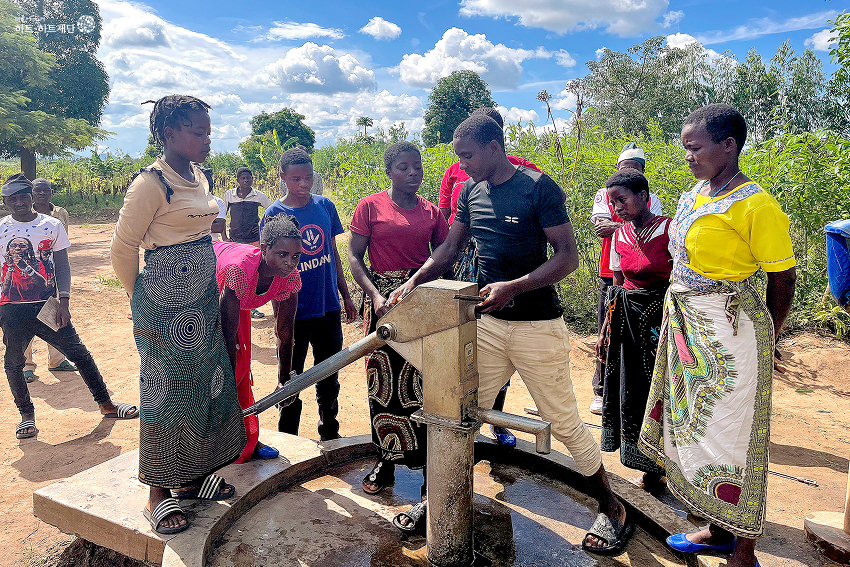
Practical training session for the capacity building of the Water Point Committees
To address this, Heart to Heart Foundation has started this activity to strengthen the management capabilities of WPCs,
creating an environment where community members can access safe water.
This large-scale training involves a total of 447 participants, including members from 40 WPCs,
Village Heads, and chairpersons of Village Development Committees (VDCs).
To maximize efficiency and engagement, the sessions are being conducted in intensive,
small-group clusters, with 2 to 3 WPCs grouped together for each session.
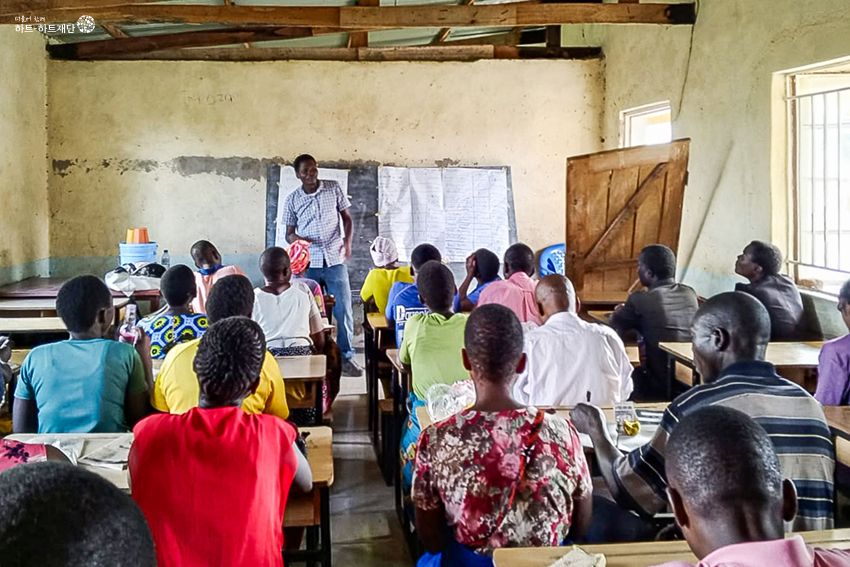
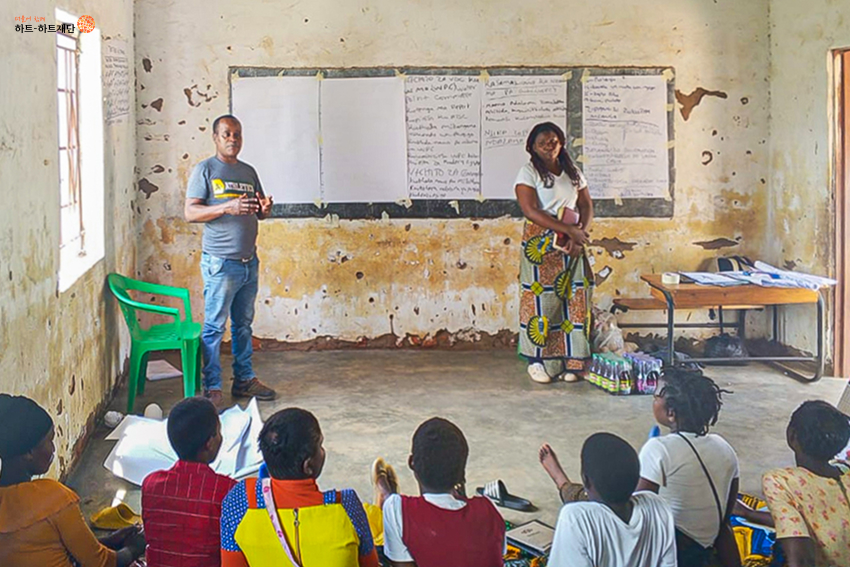
Officers from the Zomba District Water Development Office and Community Development Assistant conducting a training session for the WPC
[Capacity Building Training for Water Point Committees]
Training Session for Capacity Building of Water Point Committees(WPC)
This training focused on developing practical management skills by integrating theoretical learning with hands-on practice.
The on-site theoretical sessions covered essential topics such as the operation and maintenance (O&M) of completed water facilities,
enhancing hygiene awareness, and managing O&M funds.
Additionally, participants worked on developing concrete Action Plans to ensure long-term and systematic facility management.
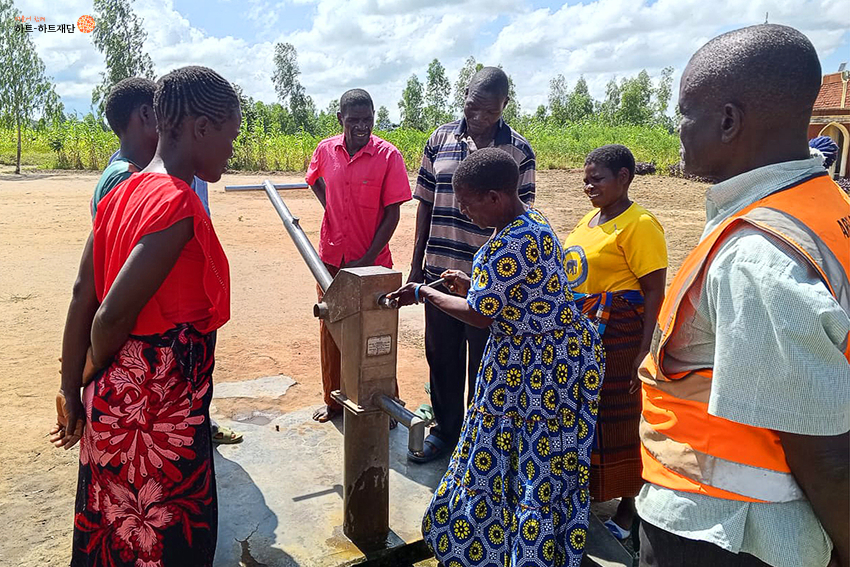
Practical training session for the capacity building of the Water Point Committees
Furthermore, practical sessions on facility disassembly and inspection were conducted to
empower committee members to manage water pumps independently,without relying solely on external technicians.
By disassembling the pumps themselves,
members inspected parts for wear or damage and experienced firsthand the critical importance of preventive maintenance.
Through this training, each committee established a three-month periodic inspection system.
They also built a reliable maintenance network by signing one-year service agreements with local technicians,
ensuring that professional repairs can be requested whenever a major technical issue arises.
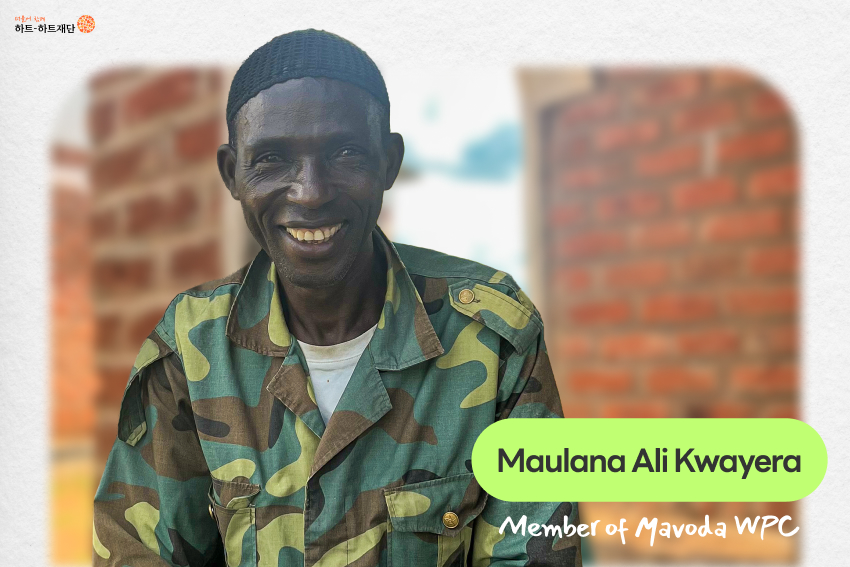
We have gained the confidence to protect our water source on our own.
Through this training, I have come to clearly understand the structure and principles of our water facilities.
Now, I plan to return to my village, reach an agreement with the communities on sharing maintenance costs,
and manage the funds transparently.
I also intend to keep spare parts in stock at all times for emergencies.
I am truly happy that we now have the capacity to manage the facilities ourselves,
rather than running to the government office to ask for repairs every time something breaks.
— Maulana Ali Kwayera, Member of Mavoda WPC
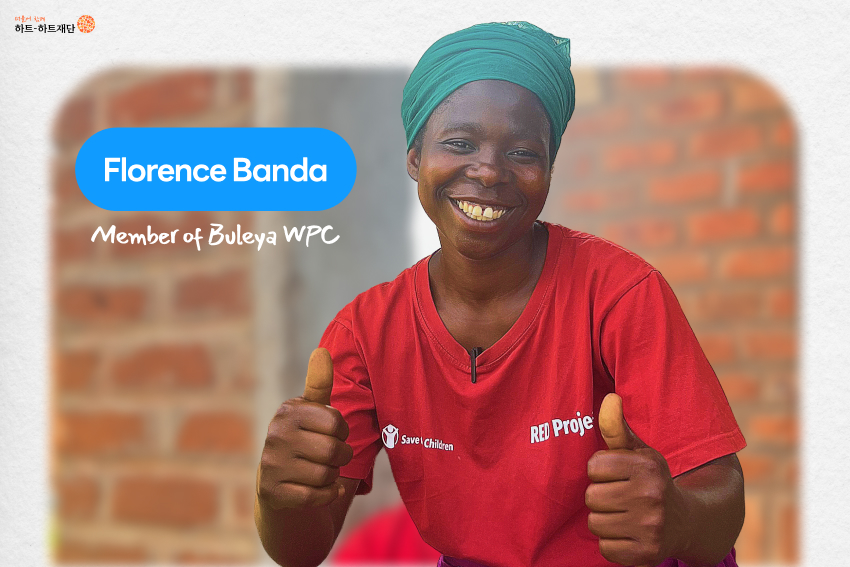
Now I can understand what is wrong when there is sound of the pump.
In the past, even when I heard a strange noise from the borehole, I didn’t know what it meant or what was happening inside.
But now, I understand that there are parts that must be replaced on time.
I’ve learned that if we don’t maintain them promptly, the entire facility eventually stops working.
From now on, I plan to replace worn-out parts immediately during our regular inspections.”
— Florence Banda, Member of Buleya WPC
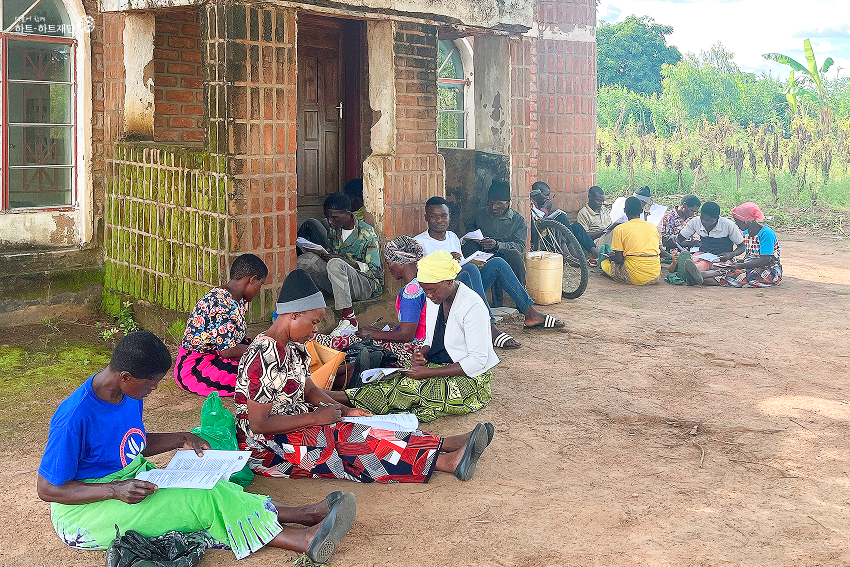
Participants taking a post-test after the training session
Capacity-building training for Water Point Committees, with enthusiastic participation,
has served as a vital stepping stone in improving water management systems through community engagement
and ensuring a sustainable supply of clean and safe water.
Heart to Heart Foundation will continue to work hand-in-hand with communities of Zomba, Malawi, to improve the sustainable WASH environment,
ensuring everyone has access to safe and healthy drinking water.
Please stay with us on this journey toward clean change, driven by the people of Malawi!
Heart to Heart Foundation is implementing the "Community Participatory Integrated WASH Improvement Project"
in Zomba District, Malawi, with support from the Korea International Cooperation Agency (KOICA)