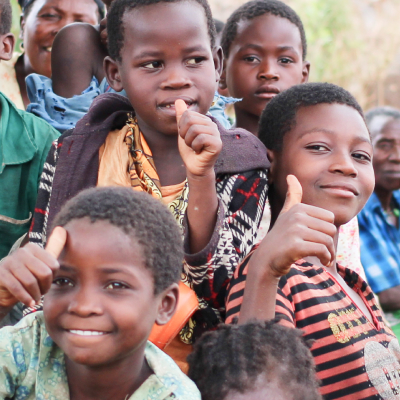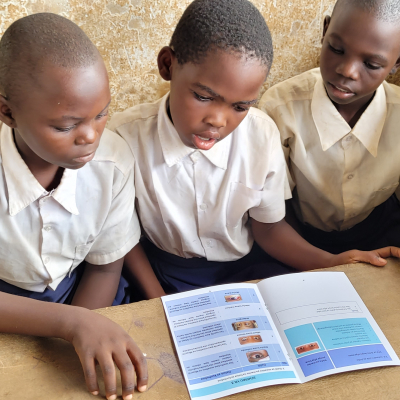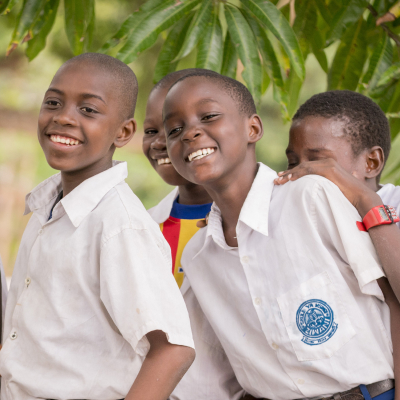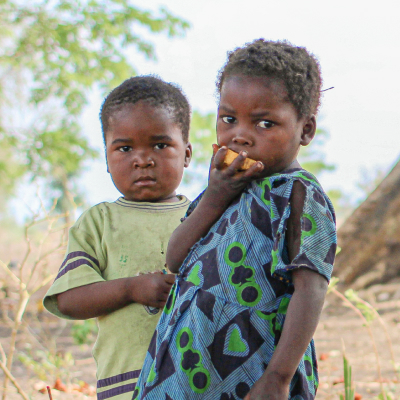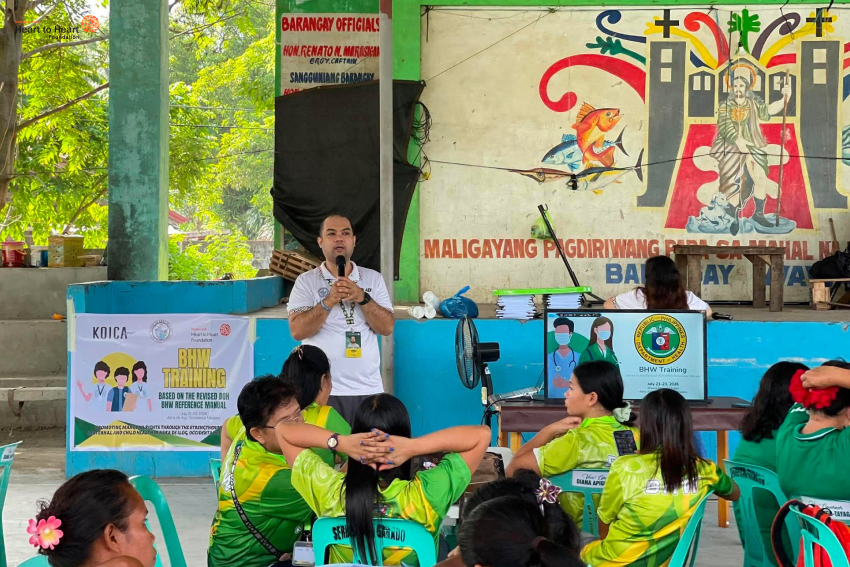
Trainers and village health workers during the training
Heart-Heart Foundation Philippines is implementing a project to promote the rights of the Mangyan people
by strengthening maternal and child health services in Abra de Ilog, Occidental Mindoro, Philippines. From July 21 to 23,
a three-day training was held for Barangay Health Workers (BHWs) from 10 villages.
The training aimed not only to strengthen their knowledge of maternal and child health,
but also to build their capacity to provide tailored services
that respect the unique culture of the Mangyan Indigenous people and help improve their right to health.
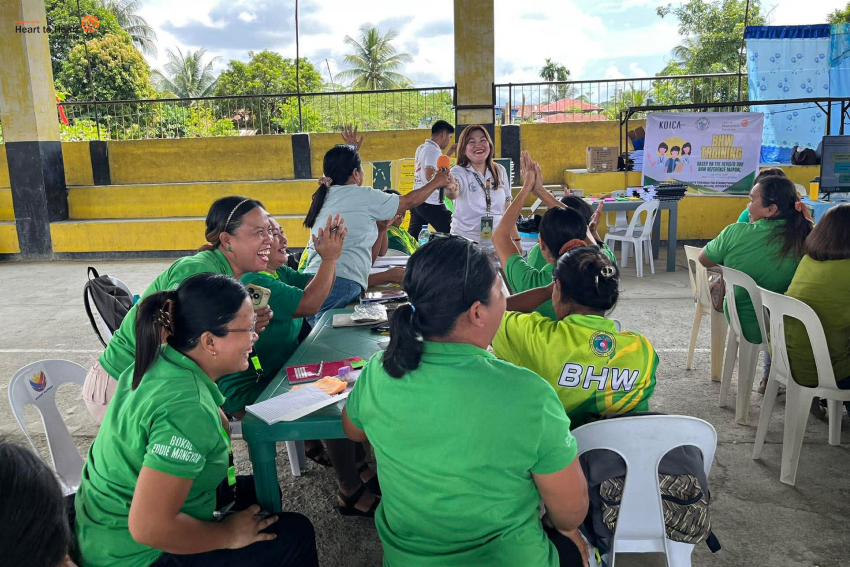
Participants engaging in the training and giving presentations
Mangyan people are Indigenous peoples and ethnic minorities in the Philippines who often face social and cultural marginalization.
Many live in remote mountainous areas far from town centers, making it difficult to access not only basic social services
but also essential healthcare in a timely manner.
Village Health Workers (BHWs) play an important role in addressing these challenges.
As healthcare providers who work closely with community members,
they are often the first to monitor the health of residents and children.
They also help connect pregnant women with hospitals so they can receive proper antenatal and postnatal care,
while supporting referrals and transportation to healthcare facilities when needed.
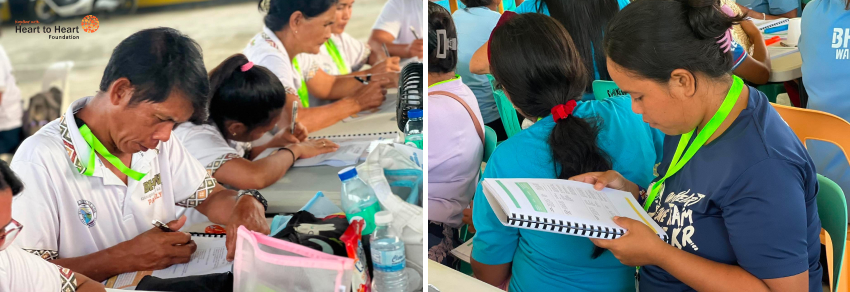
Village health workers attending the training with educational materials
Against this backdrop, the training began with a focus on respecting the unique culture
and way of life that the Mangyan people have preserved over generations.
The goal was to equip village health workers to engage with residents with the same respect and understanding,
while helping ensure that community members can access healthcare when they need it most.
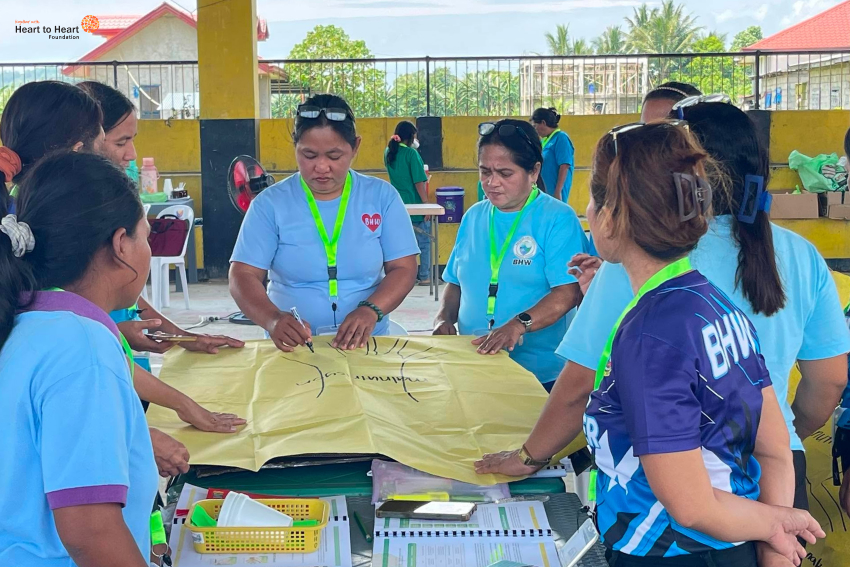
Participants taking part in a team activity
While last year’s one-day training focused on improving understanding of maternal and child health and the Mangyan people’s right to health,
this year’s training was extended to three days to cover a broader range of skills needed for BHWs to promote these rights in their communities.
In addition to strengthening health knowledge, the training focused on building their capacity to provide more inclusive healthcare services for the Mangyan people,
including cultural respect and communication, counseling, referrals, and follow-up care.
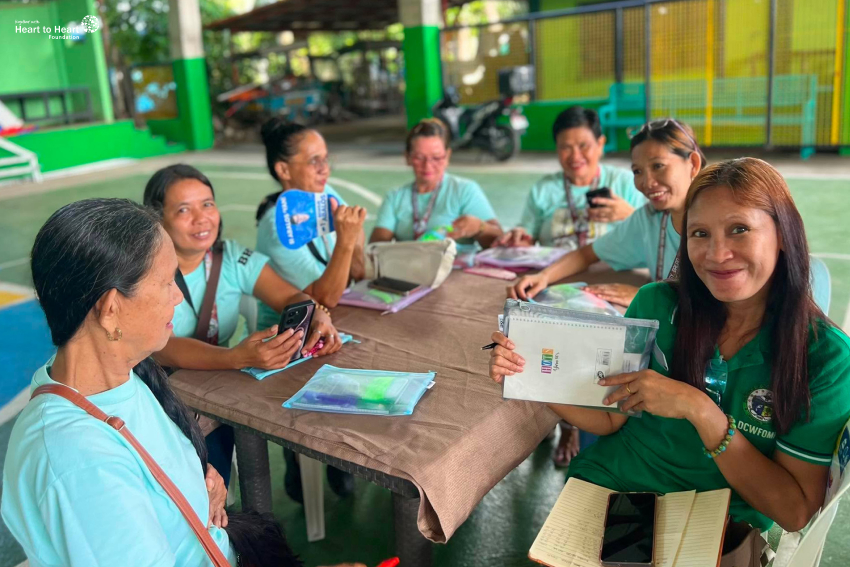
Village health workers participating in a group activity
The Village Health Workers learned about maternal and child health, infection prevention and control, basic first aid, disaster preparedness,
and the management of medical supplies and health records based on the Philippine Department of Health’s updated training manual.
To support effective learning, the training used a variety of interactive methods,
including group discussions, activities, demonstrations, and scenario-based practice.
Participants discussed the barriers Mangyan community members face when accessing healthcare,
including geographic isolation, financial difficulties, limited health information, and language and cultural differences.
They explored each barrier and shared their own experiences and perspectives on
why these challenges can lead people to delay seeking medical care.
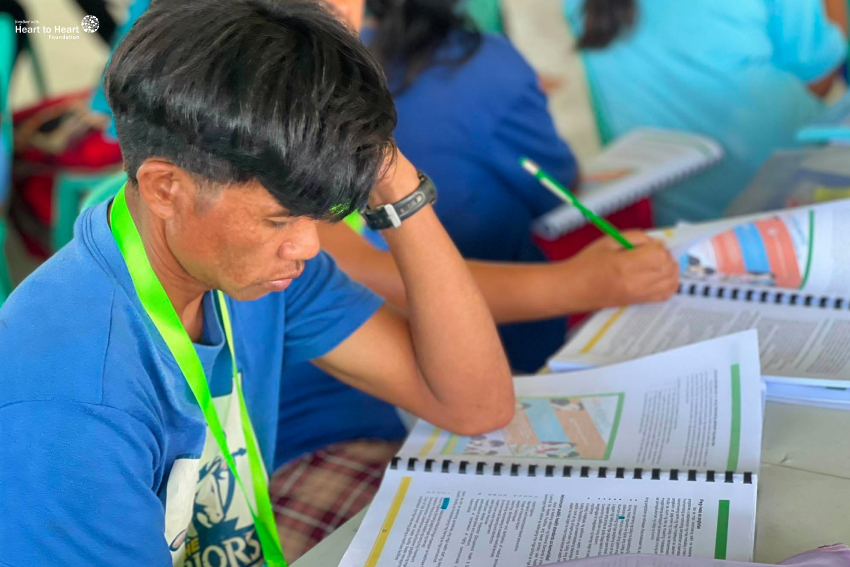
Training materials and participants
Throughout the training, participants were encouraged to see themselves not simply as healthcare workers,
but as advocates for the community’s right to health.
As health leaders in their villages, they learned how to provide accurate health information so that residents can make informed decisions about their health,
as well as how to connect residents with hospitals when medical care is needed, including during childbirth,
and how to provide continued support and follow-up.
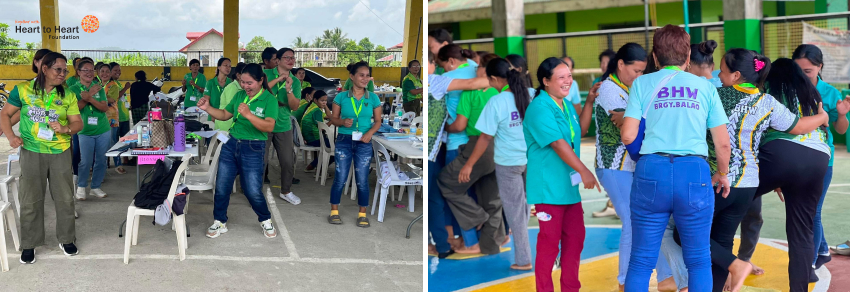
(Left) Participants doing an exercise routine / (Right) Health workers taking part in a game activity
Through this training, the Village Health Workers had the opportunity to strengthen
their role in improving maternal and child health among the Mangyan people
while respecting their social and cultural backgrounds and promoting their rights.
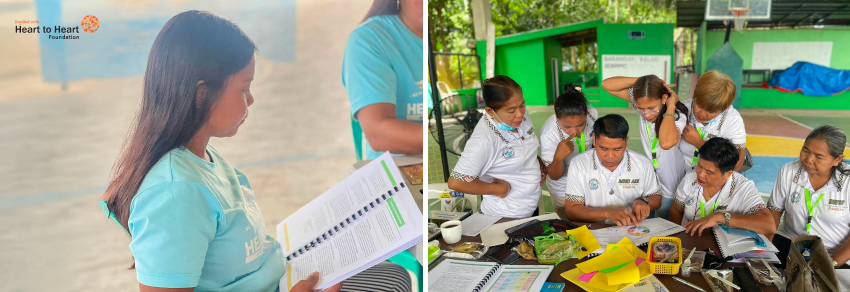
(Left) Community health worker reviewing training materials
(Right) Participants taking part in a team activity
One Mangyan Village Health Worker reflected that, in the past,
she had mainly taken part in activities requested of her,
such as performing traditional dances at community events.
This training, however, was different. As both a member of the Mangyan community and a Village Health Worker,
she was able to share her experiences and stories from the community.
She said the experience helped her better understand her role and what she can do for her community.
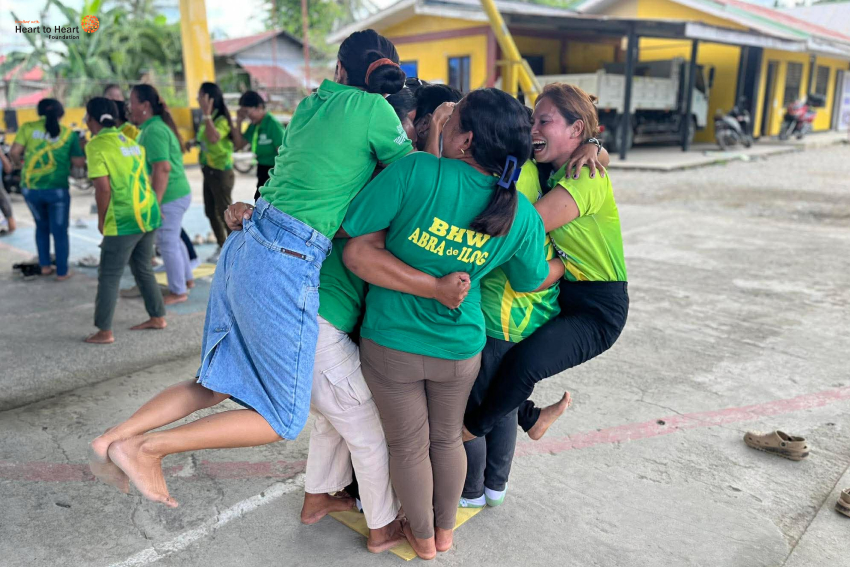
Participants taking part in an educational game activity
These achievements were also reflected in the assessment results.
A comparison of the pre- and post-training assessments showed a 21.2% improvement in maternal
and child health knowledge and a 16.6% improvement in the capacity to provide inclusive,
rights-based health services, demonstrating the effectiveness of the training.
In particular, the improvement in the capacity to provide inclusive,
rights-based services shows that the work of Village Health Workers can contribute to improving the Mangyan people’s right to health,
further highlighting the impact of the training.
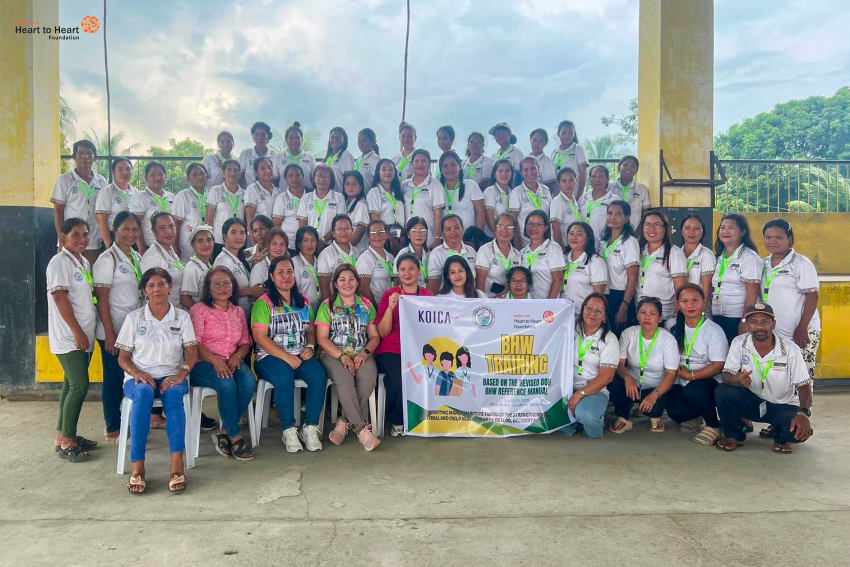
Group photo of participants and trainers
Heart-Heart Foundation is committed to ensuring that this training is not a one-time effort.
We will continue to stand alongside the Mangyan community on the journey toward breaking down the discrimination and barriers they face.
Your interest and support are a great source of strength on this journey.
We hope you will continue to support our work!
Heart-Heart Foundation Philippines is implementing the “Promoting the Rights of the Mangyan People through Strengthening Maternal
and Child Health in Abra de Ilog, Occidental Mindoro, Philippines (2024–2026)” project as part of the Korea International Cooperation Agency (KOICA)’s Civil Society Partnership Program.